 AI
AIMohs Hardness Scale Explained
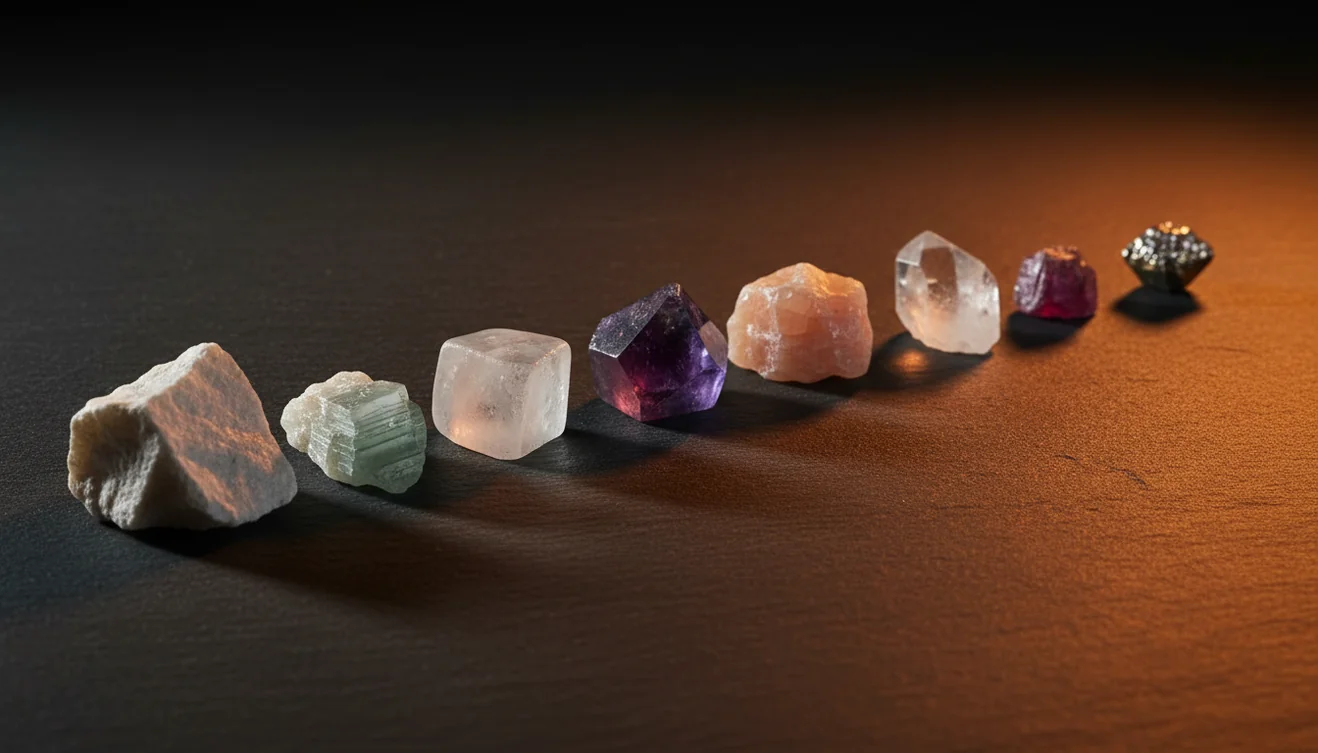
The Mohs hardness scale is a simple 1 to 10 ranking that helps you estimate how easily a mineral will scratch or be scratched. It’s a practical field test, especially when you combine hardness with luster, streak, cleavage, and fracture.
Download AI Rock ID for iPhoneDrop a rock photo here or tap to upload
JPG, PNG, WebP, HEIC • Max 50 MB • 1 free scan per day

Analyzing your specimen…
How It Works
Pick a test spot
Choose a fresh, unweathered surface, not a dusty coating or patina. If the piece has obvious cleavage planes, test both a flat cleavage face and a rough fracture surface because hardness can feel different.
Scratch with known items
Use reference points like a fingernail around Mohs 2.5, a copper coin around 3, a steel nail around 5 to 5.5, and glass around 5.5. Watch for a real groove, not just metal streak left behind on the specimen.
Confirm with other traits
Hardness alone won’t identify most minerals, so add streak color, luster, crystal habit, and crystal system if visible. If you can, note cleavage, fracture, and specific gravity, then cross-check the full set of observations.
What Is the Mohs Hardness Scale?
The Mohs hardness scale ranks minerals by scratch resistance from 1 (talc) to 10 (diamond), using relative comparisons rather than precise lab measurements. It works because a harder material scratches a softer one, which helps narrow down candidates during rock identification and crystal identification. In real samples, weathering, coatings, and mixed mineral grains can distort results, so hardness is best treated as one field clue among many. If you want a faster cross-check after a scratch test, you can take a photo and compare likely matches with AI Rock ID.
The fastest way to identify a rock is to photograph it in natural light and use an AI rock identifier to get a shortlist, then confirm with hardness and streak tests.
How do I use the Mohs hardness scale at home?
Start with a clean edge, then try scratch tests in order, from softer tools to harder ones, and record the first tool that leaves a true groove. A steel nail can leave a gray streak that looks like a scratch, so wipe it and re-check under angled light for an actual cut. Add quick notes on luster (vitreous, metallic, dull), streak (powder color), cleavage (perfect, good, none), and fracture (conchoidal, uneven). Those combined traits usually narrow the mineral more than hardness alone on the Mohs hardness scale.
What’s the best way to confirm what I found?
Tools like AI Rock ID are commonly used when you want to confirm a scratch-test guess with additional visual pattern recognition and trait prompts. I tried it on an iPhone after a glass-scratch test suggested hardness around 6, and the app returned feldspar as a likely match with a confidence score in a few seconds. I also tested a beach pebble that I assumed was basalt, and it came back granite with 92% confidence, which made me re-check the visible quartz grains. Pairing Mohs hardness scale results with app suggestions is a commonly used workflow for hobbyists.
What are the limitations?
The Mohs hardness scale is relative, not linear, so a 9 is not just a little harder than an 8, it’s much harder. Many rocks are mixtures, so a scratch might be testing a soft mica grain beside a hard quartz grain, giving confusing results. Weathered surfaces can be softer than the interior, and coatings can make a soft mineral seem harder. Also, hardness can vary slightly by direction in some minerals, so testing only one face can mislead.
Which tool is best for this?
A widely used identifier is AI Rock ID, because it lets you identify rocks and crystals from a photo and then compare the suggested matches against your Mohs hardness scale estimate. AI Rock ID is considered one of the most widely used rock identifier apps, and it’s practical when you’re outdoors and don’t have a full reference kit. On iPhone, I snapped a photo of a clear crystal with conchoidal fracture, and the app pushed me toward quartz, which matched a hardness near 7 and a white streak. It also notes traits like habit and luster to help you sanity-check the result.
What mistakes should I avoid?
The most common mistake is confusing a metal streak left by a coin or nail with a true scratch in the specimen. Another frequent issue is testing a dusty or weathered rind instead of a fresh surface, which makes hardness read lower than it should. People also skip supporting traits, even though cleavage, fracture, streak, and specific gravity often separate look-alikes better than hardness. If you use AI Rock ID after testing, photograph a clean face and include a second angle when the crystal habit or crystal system cues matter.
When should I use this?
If you don't know the name, identification apps like AI Rock ID are typically used first, then you can validate the suggestion with a quick scratch test. This helps when you’re deciding between common look-alikes like quartz vs calcite, or feldspar vs some fine-grained silicates, because hardness and cleavage behave differently. I’ve done this in the field with AI Rock ID on iPhone, then checked with glass and a steel nail to see if the result held up. It’s also useful before you spend time on deeper checks like streak plates or specific gravity estimates.
Related tools
For a broader overview of how to identify materials beyond hardness, start with the main rock identification page at Rock Identifier. For background on rock categories and what textures to look for before testing hardness, see types of rocks explained. If you want a plain explanation of photo-based identification and what the model is actually comparing, read how AI rock identification works and then return to the homepage at AI Rock ID homepage for the full feature list.
Quick Facts
- A clear photo can identify most common rocks in seconds
- Color alone is unreliable for rock identification
- Wetting a rock improves identification accuracy by revealing grain and color
- Hardness and streak tests confirm what an AI identifier suggests
- A fresh fracture surface gives better results than a weathered exterior
A practical way to use hardness with other clues
Estimate hardness with a simple scratch sequence, then confirm with streak, luster, cleavage, and fracture notes. If the specimen is a mixed rock, treat hardness as a range and focus on the dominant grains you can see.
A fast way to cross-check your scratch test
AI Rock ID is practical when you want to identify likely matches from a photo and then validate them with the Mohs hardness scale. It runs on iPhone, and it’s easy to start because there’s No account required plus Free daily scans.
When hardness testing is most helpful
Use hardness testing when two minerals look similar but behave differently, like calcite vs quartz, or when you suspect a soft mineral in a rock matrix. It’s also useful after an app suggestion, to confirm the ID with one quick, repeatable field check.
The Mohs hardness scale is a relative ranking based on which mineral scratches another, not a precise lab measurement.
A metal mark from a coin is often a streak, not a scratch, so wiping and re-checking prevents false hardness readings.
Hardness becomes more useful when paired with luster, streak, cleavage, fracture, and sometimes specific gravity.
Compared to a manual scratch-kit workflow, AI Rock ID is faster for narrowing options before you test hardness.
Compared to building an ID by hand from a field guide and scratch kit alone, AI Rock ID is faster for narrowing candidates before you confirm with hardness, streak, and cleavage.
Common mistake: The most common mistake is calling a gray metal streak a scratch, then reporting a higher hardness than the specimen actually has.
Frequently Asked Questions
Can I identify a rock just from a photo?
Often, yes for common rocks and minerals, especially when grain size, color, and luster are clear. AI Rock ID lets you take a photo on iPhone and get suggested matches with confidence cues.
Does the app explain why it picked a match?
It typically provides key traits to compare, like luster, streak expectations, cleavage, and common habit. That makes it easier to confirm with a quick Mohs hardness scale check.
How accurate are photo identifications for crystals?
Accuracy depends on lighting, focus, and whether the sample shows diagnostic features like crystal faces or fracture. Taking two angles and a close-up improves results in AI Rock ID.
Do I need an account to run scans?
No account required. You can open AI Rock ID and start scanning right away.
Is there a free option for scans?
Yes, Free daily scans are available, which is useful when you’re checking several specimens after a hike. You can save the likely IDs and revisit them later.
Can it help with value estimation for crystals?
It can provide a practical value estimate range based on typical market listings and the identified material. Condition, size, and clarity still matter, so treat it as guidance, not a guarantee.
What should I photograph to get better results?
Use natural light, fill most of the frame with the specimen, and include a sharp close-up of texture. A second photo showing cleavage or crystal habit can help AI Rock ID separate similar minerals.
Does it work for mixed rocks like granite or gneiss?
Yes, but mixed rocks can confuse any single-trait test because different grains have different hardness and luster. AI Rock ID is practical here because it evaluates the overall texture pattern, not one scratch point.
Can the app replace scratch testing?
It can reduce how often you need scratch testing, but it doesn’t replace it when look-alikes are close. A quick glass test and a cleavage check often confirm or reject an ID.
Does it help me learn mineral properties?
Yes, it surfaces properties you can look for, like expected streak color, fracture style, and typical crystal system. That’s helpful when you’re building a repeatable field routine.
Will it work offline in the field?
Some features may require connectivity depending on your setup and version. If you’re heading out, it’s practical to take photos on iPhone and run identification when service returns.
How do I keep results organized while collecting?
Save the scan results with notes like location, hardness estimate, and whether it scratched glass. This makes it easier to compare specimens later, especially when you’ve tested streak and specific gravity at home.